
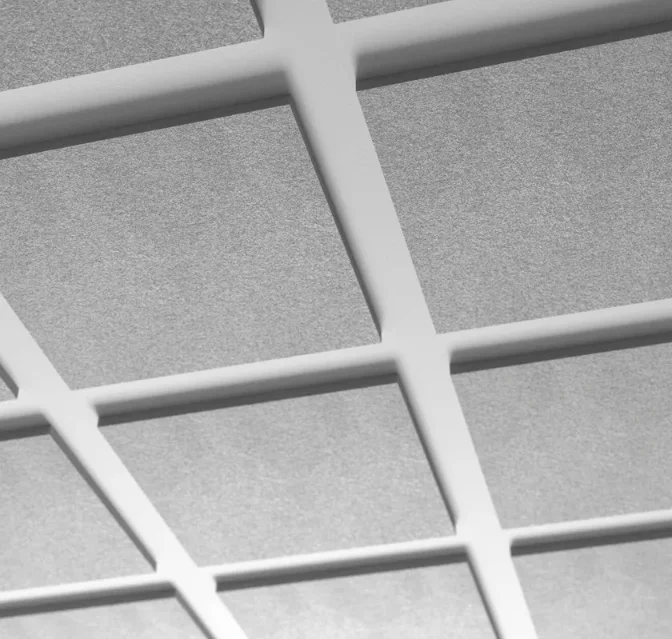
The most effective method is a multi-dimensional approach that targets the three main reflection planes: The Ceiling (using suspended acoustic clouds or baffles that leave the concrete visible), The Walls (using high-NRC PET felt panels), and The Floor (using commercial-grade acoustic carpet tiles). Aiming to cover 20% to 30% of the room’s total hard surface area will successfully reduce the reverberation time ($RT_{60}$) to an optimal range of 0.6 to 0.8 seconds.
Why Concrete Ceilings Cause Echo Problems
Concrete is a highly reflective surface. Unlike soft materials that absorb sound waves, concrete bounces sound back into the room repeatedly.
In an open-plan office, multiple reflective surfaces often work together:
- Exposed concrete ceilings
- Glass partitions
- Polished floors
- Minimal soft furnishings
- Large open layouts
This creates excessive reverberation, where sound lingers in the space longer than it should.
Common symptoms include:
- Employees struggling to focus
- Difficult phone or video calls
- Poor speech intelligibility
- Increased stress and fatigue
- Lack of privacy between teams
Studies consistently show that workplace noise is one of the top productivity complaints in modern offices.
The Science Behind Office Echo
Echo and reverberation occur when sound waves reflect continuously off hard surfaces instead of being absorbed.
The key acoustic metric is RT60 — the time it takes for sound to decay by 60 dB.
For open-plan offices, the recommended reverberation time is generally:
| Office Type | Recommended RT60 |
|---|---|
| Open-plan office | 0.5 – 0.8 seconds |
| Meeting rooms | 0.4 – 0.6 seconds |
| Phone booths | 0.3 – 0.5 seconds |
Best Solutions for Echo in Offices With Concrete Ceilings
1. Install Acoustic Ceiling Baffles
Acoustic ceiling baffles are one of the most effective solutions for exposed concrete ceilings because they absorb sound while maintaining an open industrial appearance.
These suspended vertical panels reduce reflected noise and break up sound paths across large spaces.
Benefits of Ceiling Baffles
- Excellent sound absorption
- Ideal for high ceilings
- Maintains exposed ceiling aesthetics
- Improves speech clarity
- Easy retrofitting in existing offices
Recommended Materials
- PET felt acoustic panels
- Fiberglass acoustic cores
- Fabric-wrapped absorbers
PET felt baffles are especially popular because they combine sustainability, lightweight installation, and modern design flexibility.
2. Use Suspended Acoustic Ceiling Clouds
Acoustic ceiling clouds are horizontal suspended panels positioned below the concrete ceiling.
Unlike traditional dropped ceilings, clouds preserve ceiling height while dramatically reducing reverberation.
Best Applications
- Collaborative zones
- Reception areas
- Conference spaces
- Coworking environments
Cloud panels can also become a visual design feature through customized shapes, colors, and lighting integration.
3. Add Acoustic Wall Panels
Ceiling treatments alone are rarely enough in large open offices.
Sound reflections also bounce between walls, especially glass or drywall surfaces.
Installing acoustic wall panels helps absorb mid- and high-frequency noise while improving overall acoustic balance.
Effective Placement Areas
- Behind workstations
- Hallways
- Meeting rooms
- Breakout spaces
- Near collaborative areas
Decorative PET felt wall panels are increasingly used because they combine acoustic performance with architectural aesthetics.
4. Introduce Acoustic Desk Dividers
Open-plan layouts often lack sound barriers between employees.
Acoustic desk screens and workstation dividers help reduce direct speech transmission and improve concentration.
Key Advantages
- Better speech privacy
- Reduced distractions
- Improved focus
- Easy modular installation
Modern PET felt dividers also support biophilic and minimalist office designs.
5. Use Soft Furnishings Strategically
Even small soft elements can contribute significantly to sound absorption.
Consider adding:
- Acoustic carpets
- Upholstered seating
- Curtains
- Fabric partitions
- Soft breakout furniture
These materials reduce reflected sound energy and complement larger acoustic systems.
6. Create Zoned Acoustic Design
Not every office area requires the same acoustic treatment.
A smarter approach is zoning the workspace based on activity levels.
Example Acoustic Zones
| Zone | Acoustic Priority |
|---|---|
| Focus workstations | High absorption |
| Meeting areas | Speech clarity |
| Collaboration spaces | Balanced control |
| Cafeteria/lounge | Moderate absorption |
Why PET Felt Acoustic Panels Are Ideal for Concrete Ceiling Offices
PET felt acoustic solutions have become a leading choice for modern commercial interiors.
Advantages of PET Felt Panels
- High NRC sound absorption ratings
- Lightweight and easy to install
- Sustainable recycled materials
- Wide range of colors and textures
- Custom CNC-cut designs
- Fire-rated commercial options
They work exceptionally well in:
- Tech offices
- Coworking spaces
- Creative studios
- Conference centers
- Educational environments
Because concrete ceilings already create a minimalist industrial aesthetic, PET felt systems integrate naturally into the design language.
How Much Acoustic Treatment Does an Office Need?
A common mistake is underestimating coverage requirements.
For offices with exposed concrete ceilings, acoustic consultants often recommend treating:
- 30–60% of ceiling area
- Key reflective wall surfaces
- High-noise collaborative zones
The exact amount depends on:
- Ceiling height
- Occupancy density
- Flooring type
- Office layout
- Existing furniture
Professional acoustic testing can provide precise RT60 measurements and treatment recommendations.
Acoustic Design Trends in Modern Offices
Today’s workplace acoustics are no longer purely functional. Acoustic products are increasingly integrated into interior architecture.
Popular trends include:
- Sculptural ceiling baffles
- 3D acoustic wall panels
- Biophilic acoustic elements
- Custom brand-colored felt systems
- Integrated lighting + acoustics
- Modular acoustic zoning
This allows companies to improve productivity while enhancing visual identity.
Final Thoughts
Concrete ceilings may look modern and stylish, but without proper acoustic treatment, they can seriously impact workplace comfort and productivity.
The most effective approach combines multiple acoustic strategies:
- Ceiling baffles
- Acoustic clouds
- Wall panels
- Desk dividers
- Soft furnishings
- Smart zoning
Among these solutions, PET felt acoustic systems offer one of the best balances between acoustic performance, sustainability, installation flexibility, and contemporary office aesthetics.
If you are designing or renovating an open-plan office, addressing echo early in the project can dramatically improve employee wellbeing, communication quality, and overall workspace experience.
FAQs About Concrete Ceiling Office Echo
How do you reduce echo in an office with exposed concrete ceilings?
The best solutions include acoustic ceiling baffles, suspended ceiling clouds, wall panels, carpets, and acoustic dividers. Combining multiple sound-absorbing elements delivers the best results.
Are acoustic ceiling baffles effective?
Yes. Ceiling baffles are highly effective in open-plan offices because they absorb reflected sound waves while preserving an exposed industrial ceiling design.
What is the best acoustic material for modern offices?
PET felt acoustic panels are widely considered one of the best options due to their sound absorption performance, sustainability, lightweight installation, and modern appearance.
Can you improve office acoustics without a dropped ceiling?
Absolutely. Suspended baffles, acoustic clouds, wall panels, and desk dividers are specifically designed for offices with exposed concrete ceilings.
Do acoustic panels really work in open offices?
Yes. Properly installed acoustic panels significantly reduce reverberation, improve speech clarity, and create a more comfortable and productive working environment.